
AD – Gifted for the purpose of this review from the Author Sharon Luca
Talking to children about death can really help them to understand it. It’s a very difficult topic to open up about but one that I have yet to talk about on my blog.
Our journey
Although I’ve spoken openly about my own grief and how losing my Mum has impacted on my life, I haven’t talked about the children.
My son F, was 10 when Mum was diagnosed with Cancer. We didn’t keep it from him because it was clear for all to see that she was not well. But I didn’t share exactly what was going on.
I could claim that there wasn’t time, It’s not a lie. 3 months is no time to adjust to the news that your Mum has cancer and that there is nothing that can be done. I didn’t have the capacity to fully understand this myself so how could I possibly tell my 10 year old in a way he could really understand.
Talking to children about death before it happens
Once we knew there was ABSOLUTELY nothing that could be done, I knew I needed to tell him something. I almost can’t remember what I told him now, that whole 3 months is a bit of a blur if I am honest.
Rob and I sat down with F and were straight with him. He already ‘got it’, He’d watched her deteriorate just like we had. We’d not hidden any of this from him. For me at the time, I didn’t consider keeping him away. I wanted him to spend as much time with her as possible.
Like me though, hearing the words that we knew deep down were devastating. When your own grief is at the forefront of every moment, talking about it with young children is even more difficult. Children are not as clueless as we expect them to be. We can only shelter them so much.
Talking to children about death when it happens
- Here are some useful points to consider when it comes to talking to your children about death.
- Be honest about what has happened.
- Make sure the conversation is age appropriate. You can’t tell a 2 year old what you’d tell a 10 year old and vice versa.
- Be clear, use language they will understand but don’t skirt around it. The last thing you would want is for them to misinterpret it and think their loved one is coming back or is just asleep.
- Let them feel however they want. Do not tell them not to be sad, or not to cry or tell them not to worry. Make sure they know how they are feeling is OK, No matter what that emotion is.
- Do not hide your own emotions from them. They need to see that it is OK to feel sad or to want to cry. Explain why you’re sad and do not feel you have to be strong for them all the time.
- Offer them reassurance. It can be really scary for a child to lose someone. They may worry about losing you and need that reassurance and honesty from you.
- Make sure they feel safe to talk about their loved one. Often we can all be guilty of feeling like we can’t talk about someone when they’ve died. But by talking about them, you are acknowledging how important they were to you. This is something children need to recognise.
- Find suitable resources to work with. One of the resources I’ve read that would work well for younger children is the book Why did Grandad Die? Read on to see what I thought
Why did Grandad die? A book review.
This book is written by Sharon Luca, the founder of The Luca Foundation. This foundation began after her son Luca was stillborn in 2012.
The foundation raise money to provide each maternity unit in the UK with a cuddle cot, or fix broken and damaged ones as well as providing valuable training for maternity staff. The book is available to purchase on their website at £9.99.
The book is definitely aimed at a younger audience. Visually the illustrations are really effective in telling the story along side the text.
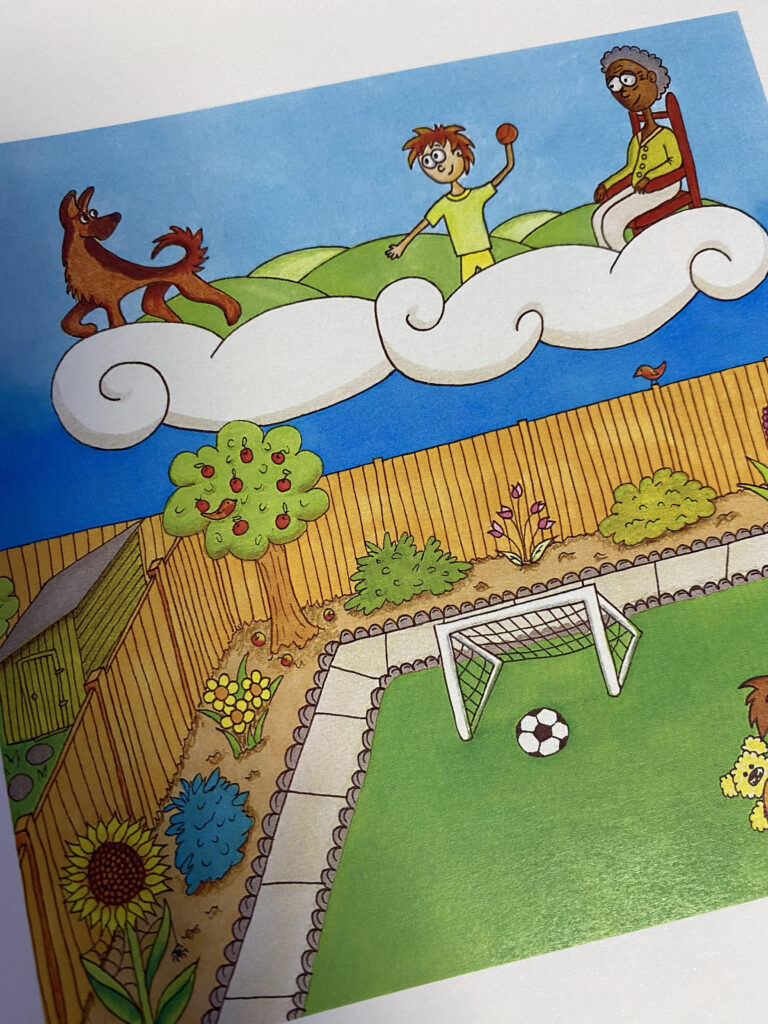
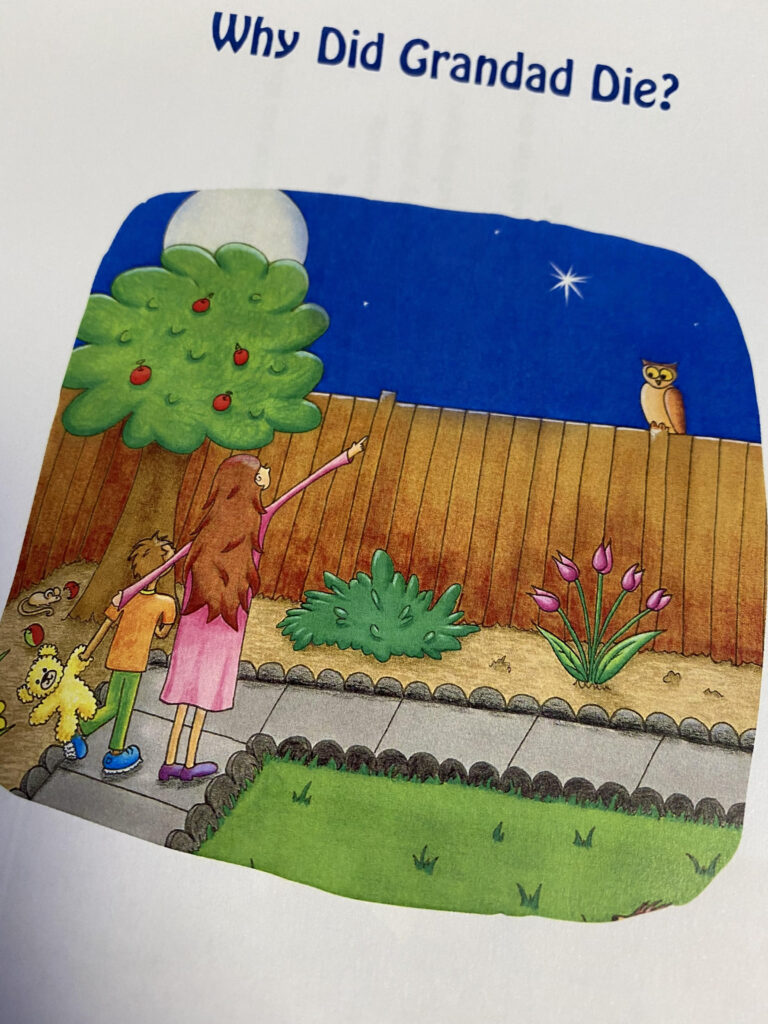
The story is short but tells the story of a Kalum who’s Brother died and now his Grandad. His Mother explains to him why they died and where he is now. It’s clear and concise in it’s message.
The story talks about a beloved pet, the writers view on what happens to a person’s soul after they die and what is involved in a funeral.
It is dealt with so sensitively but has all the relevant information that is important when handling this difficult subject. Of course we all have very different views about death and the after life but for me, this book matches my own thoughts on the matter.
It was important for me that I found a book for my children that tells a version as close to my own views as possible. It is worth considering the message you want to portray when buying this book or choosing another.
I have read this book with my step children, who as well as experiencing my Mum’s passing have also recently lost their family dog. It was well received and opened up conversations and gave them an opportunity to share how they felt about it.
Moving forward
Overall my advice is to be honest with your children, let them know they are OK to cry and reassure them that they are loved. Never shy away from talking about your loved one together. I love talking about Mum and wish more people would talk about her to.
One piece of advice I was given by the Hospice after Mum died which really stuck with me as well is this.
Do not expect your children to grieve in the same way you do. I was amazed how well my son bounced back. They were best friends and he adored her. But he just seemed completely ‘OK’. When I spoke to the hospice about my concerns, she told me that he will not grieve in the same way that I do. His day to day life remains the same. He has his Mum, he feels secured and loved and all his needs are still being met. He will of course miss her greatly but he hasn’t lost his Mum.
That said, there is no time scale for grief either. 2 years down the line and he is much better at opening up about it and showing his emotions. Always allow them the time to process.
Have you lost someone dear to you and struggled to talk to your children about it? How did you as a family cope with these conversations?
This is such a hard topic. But you’ve outlined some great ways to talk to children about this.
Thank you x
These are really supportive tips – having lost a few important people in my life since having children I know how hard this topic is to talk about with children. Discussing it through a storybook is a really accessible way for them!
Thank you, it does help a lot and it means you naturally make time one on one to help them understand x
Thank you Rosie. It was so hard to write but I hope it might help people x
This post is so informative and should help so many parents or people with young children. I can’t imagine how hard it must be! Well done you for sharing this!
Rosie
Oh my goodness, I am so so sorry to hear that x
Huh, I hadn’t realised until just now that I never had the death conversation with my mum, or anyone for that matter. Even though my great uncle was murdered when I was in primary school
Thank you Michelle, it’s such a hard topic x
I can’t even imagine what it’s like to talk to a child about death. Here in South Africa, we’d say something like, “They’ve gone to be with Jesus” or something like that. There’s no easy way to do these things.
All the best, Michelle (michellesclutterbox.com)
Thank you for this as it’s such a hard topic to talk about with anyone, but especially with children. I remember when I lost my grandad when I was 14 and I was crying at his funeral/wake and so many people told me that I needed to stop crying. I think it’s important we let children know that showing emotion is okay and that crying is a valid thing to do. Thank you for sharing the book as well – I’m sure many parents will find it helpful.
Such a helpful and insightful post. It is so important to talk about these topics with adults and children. Death is a part of human life and it’s something we shouldn’t make a taboo.
Antonia || Sweet Passions
Thank you. I agree, it should not be a taboo subject x
Nice post. It’s a hard topic to talk about especially with kids but with the tips you shared it makes it easier.
Thank you Anita x
This is such an important post, Claire. I can imagine this is SO hard for parents to do. I lost a few family members when I was young. I was only 6ish when my Granddad died so I can’t remember how I was told. Then I was 10-ish when my auntie died and I remember my Mum telling me on the way home from school. Just completely out of the blue, it was so weird.
I think what your hospice said is very smart. Children are so resilient and we can’t expect them to act the same as we do. xxx
I found it really hard to hear at the time but it makes so much sense. He seems to struggle more now, Coco had him in tears recently, that was hard to see but I do think it’s good for him x
This is such an important thing to talk about, losing a loved one is very hard and we all deal with it differently. We thought we had prepared our Daughter as she had lost pets so understood that part. But never realised how hard she would find losing a loved one until we went through it
I don’t think any of us can every really prepare for it or really understand the far reaching effects until we are faced with it. Thank you so much for reading x
Every parent should read this if they’re struggling to tell their children about a death of a loved one, I can’t imagine how hard it must have been for you to tell your children about your Mum passing away, this is a beautifully written post x
Lucy | http://www.lucymary.co.uk
Thank you so much Lucy x x
I can’t imagine how hard it is to talk to a child about the death of a loved one, I hardly deal with it in my 30s now. These sound like some great ways to help people who are in this situations.
Thank you Sarah. I don’t think I’d ever given it a second thought until I needed to have those discussions. So hard x
Such a really informative post! It’s such a hard subject to deal with, but being a litte prepared beforehand will certainly help such an emotional situation. Sim x
Thank you so much Sim. Just having time to process is a start but it is an awful lot for children to take in and process x
I think understanding grief is very difficult as there is just too much emotions and questions. I do agree it is important to let them know early and in their own language so they know what is going on
It is completely overwhelming a concept, even as adults x
What a great job of discussing such a hard topic. We all want to protect our children from pain and distress, but where we can we should prepare and equipe them as best we can for losing grandparents or other loved ones. When we lost baby boy3, himself had to tell the boys how bad things were looking but they had just a couple of days to adjust to the idea that their baby who they had felt move and talked to wasn’t going to be joining our family. They wept and sobbed when we can home, then asked what was for tea. I love that they cared so deeply and that they still talk about him from time to time, but it’s a huge relief that they’ve been able to carry on OK in general.
My gran and grandma are both in their 90s and the boys know that they’re very old and their bodies are tired, they’re aware that their GG and GreatGran won’t be around forever. We’ve had to tell them this week that the old lady across the road died last weekend, we didn’t see her much but often waved or said hello when we saw her.
Anyway, I hope I won’t need your advice anytime soon, but I’ll keep it in mind when the time comes.
Thank you for sharing your own experiences. There is almost no right way to prepare for it. We just have to be honest and realise that children are very resilient.
I struggle now with showing my true emotions about my Mum but my son is so good and just seems to offer so much compassion while remaining optimistic which is incredible really x
It is so important to talk to children about this topic, as difficult as it is. My son at the age of 4 lost his grandparents dog then just after his 5th birthday, lost his great grandfather. A few weeks later, Olivia was born and my Dad passed away the next day. He had to deal with so much in such a small space of time at such a young age and we talked to him about it truthfully – because that’s what he needed. Trying to avoid the subject would have just been impossible.
He now knows that one of Mummy’s friends is very poorly (terminal diagnosis) and has been asking about that so we’ve been telling him truthfully what that means.
Thank you so much for sharing your own experiences Rebecca. It is definitely a subject that can’t be ignored. Sending love to you and your friend at this difficult time x
I can’t imagine dealing with the death of a loved one as a child, but I think this post will help many parents comfort their children. Thank you for this.
Thank you so much Tara x x
This book looks like such a useful book to use as a jumping off point for conversations about death. I was about the same age as your son when my Grandpa died and I remember my parents being really open and calm about it. They emphasised that he was very poorly and in pain, that it was very sad, but also that death was part of life and nothing to be frightened about. It prepared me really well and as an adult I have a really healthy relationship with ideas around death and dying x
I hope that my son will be the same having experienced it and handled it so well at a young age. Thank you so much for sharing your experiences with me x
This is such an important topic to talk about. I don’t know how people go about it but that book sounds like a good starting point. I don’t remember being told that my grandad has suddenly passed away. What I do remember is being at the funeral and my family always being age appropriate honest with me. As I grew up, I learnt more about what happened but it wasn’t until I was old enough to understand the more difficult points.
It is such a hard concept to really understand and I feel for anyone who has to have these conversations. I don’t think a child can ever fully understand. I know I really felt my Great Grandmothers death when she’d been gone 10 years because I was older and understood better what it really meant x
A much needed discussion. Its hard to deal with loss. You sometimes wish you could spare children completely from it, especially when they ask questions showing they don’t 100% grasp the concept as yet. Thank you for the tips and resource recommendations
Thank you so much for reading. It is so hard and I do wish you could protect them from it but I guess in the long run it is better to be honest x
It must be really difficult to do, although thankfully I have never needed to do it as yet. My friend recently passed away and left three little children behind; I can’t imagine how their Dad and his partner managed to tell them. It is heart-breaking but they are lucky to have so many loving people around them.
Oh gosh that is so sad. To leave young children behind is heartbreaking. So sorry for your loss x
Great advice. It is so hard to decide how and when to talk to children about death. I think we also tend to hide our own grief to protect children, but it is just showing it is a normal human reaction and part of the grieving process.
I love the book, it is great it is in a language children understand to help explain, process and then talk about with children.
Helen x
http://www.whathelenloves.com
Thank you so much Helen. I think keeping it simple helps children to be able to relate to it and understand it x
This is such a hard and emotive topic but I appreciate you writing about it. My children experienced death for the first time at the beginning of the year when their grandad died. We made to sure to be open and honest with them.
Thank you Elizabeth, I am so sorry for your loss x x
What a tough topic, especially for the kiddos! I like the idea of the book you mentioned. And I thought your point about letting them know it’s okay to feel whatever emotion they feel. Great tips!
Thank you so much Clarissa x
I imagine it must be so hard to find the right way to approach the subject of death with kids. I know we were always afraid of it until it happened, then we were unprepared.
Very helpful article. Thank you for sharing!
Thank you, it is such a hard topic. One that none of us really want to face x
Thank you for sharing this, I have not had to talk to my nephews about loosing their Great Grandparents it was my brother’s thing to do, it’s hard to tell an 8 and 5 (as they were then they are now 9 and 6). I did find it hard losing my granddad this year, I think we need a book for us adults as well
I think you’re right. Friends keep telling me to write on but I am not sure I have a whole book in me!
This is a very important topic, I’m glad you wrote about it.
Thank you x
This is such an important topic, and I really feel like it needs to be handled in the right way. These all sound like great tips. We haven’t had to deal with this yet but I think using books is a great way to explain things and start conversations.
Thank you Jenni. It is very hard but I think a book makes it much easier for children to understand x
wowow this is deep and super meaningful.
xoxo Ana
http://www.adreamersland.com
http://www.facebook.com/adreamersland.com
Thank you Ana x x
A very hard topic and some lovely ideas.
Thank you Lorna x
Erin’s started to ask about death and I didn’t really know where to start. Thanks for some great tips.
Thank you Lyndsey, I hope it helps x
This is great advice. In Feb this year, we lost my other half’s grandfather and we had to go through explaining this to a 6 year old. Now at the end of 2020, it looks as though my grandpa hasn’t got much time left with us and I’m dreading it all.
Oh Rachael, I am so sorry to hear that. Sending you and your family so much love x x
[…] Talking to children about the death of a loved one […]
Losing a loved one to cancer is traumatizing. I am so sorry for your loss. It’s important but difficult as well to talk with the kids about it. Your suggestions make it easier to talk about it. Thanks for the book review and for sharing your personal experience with us.